
Echocardiogram Test


When Your Doctor Might Recommend an Echocardiogram
An echocardiogram reveals the size and strength of your heart chambers, how well your valves open and close, and the patterns of blood flow through your heart. It catches problems early.
We often recommend an echo if you're experiencing:
* Shortness of breath, especially with activity or when lying down
* Chest pain or discomfort
* Palpitations (feeling like your heart is racing, fluttering, or skipping beats)
* Swelling in your legs or ankles
* A heart murmur that needs evaluation
* Unexplained fatigue or dizziness

.avif)
What to Expect During Your Echocardiogram
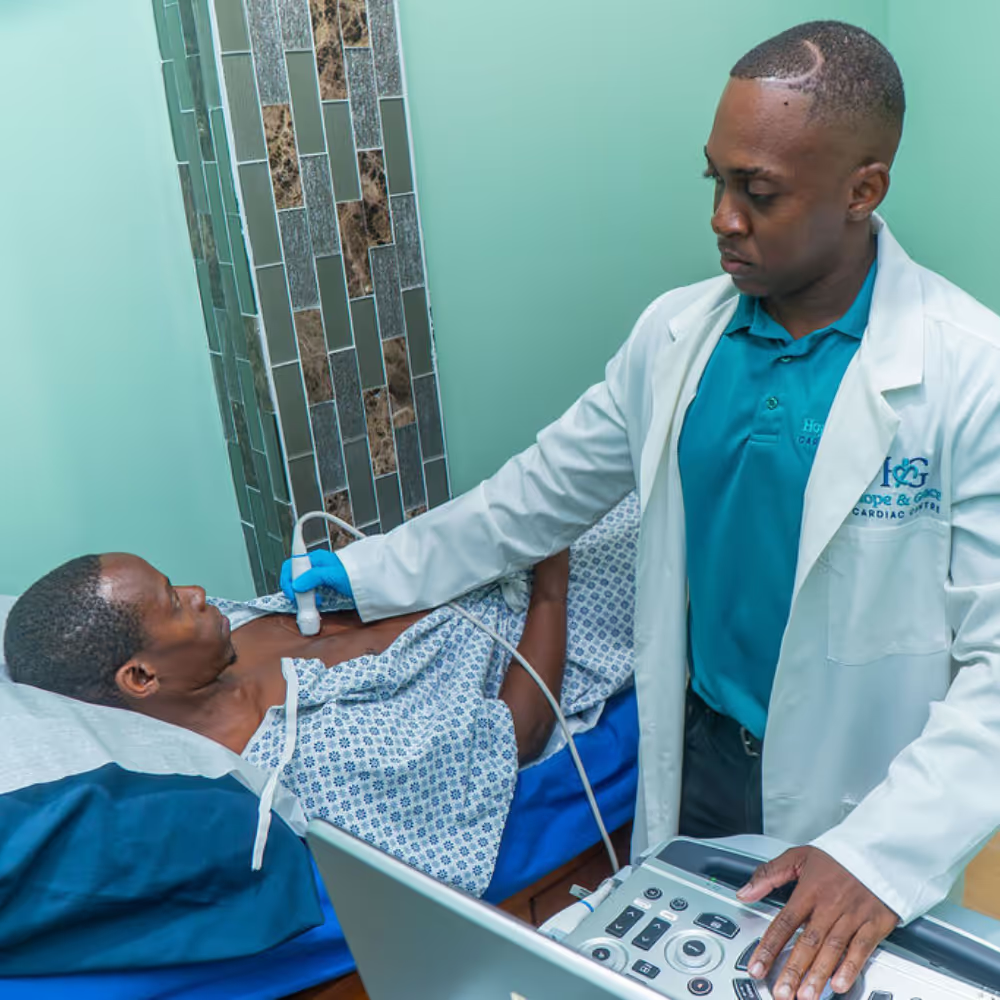
Your doctor may order an echocardiogram if you have symptoms or risk factors that suggest a heart problem. It's often the first test we use to understand what's happening.
Before Your Appointment:
Good news - you don't need to fast or do any special preparation. You can eat and drink normally before your test. Just wear comfortable, loose-fitting clothing that allows easy access to your chest area.
What We're Looking At:
The echo shows us your heart working in real time. We can see:
* Your heart's four chambers and how they're functioning
* Your heart valves and whether they're opening and closing properly
* Your heart's pumping strength (how well it moves blood)
* Blood flow through your heart
* The walls of your heart and whether they're moving normally
* The pericardium (the sac around your heart)
Frequently Asked Questions
No, it's completely painless. You might feel slight pressure as the transducer is moved across your chest, but it doesn't hurt. Most patients find it quite comfortable - some even fall asleep during the test.
No preparation or fasting is needed for a regular echocardiogram. Eat and drink normally. Just wear something comfortable.
Absolutely. You're welcome to have a family member or friend with you for support and company.
If we see anything that needs attention, we'll discuss it with you clearly and compassionately. Remember - finding a problem means we can address it. Early detection is always better than letting something go unnoticed. You won't be facing anything alone.
No. An echocardiogram uses sound waves (ultrasound), not radiation. It's completely safe and can be repeated as often as medically necessary without any risk.
Questions before your appointment?
Don't hesitate to call us. We'd rather answer every question and put your mind at ease than have you worry.